
A Larger Reality:
Ursula K. Le Guin
October 31, 2025-February 8, 2026
Oregon Contemporary
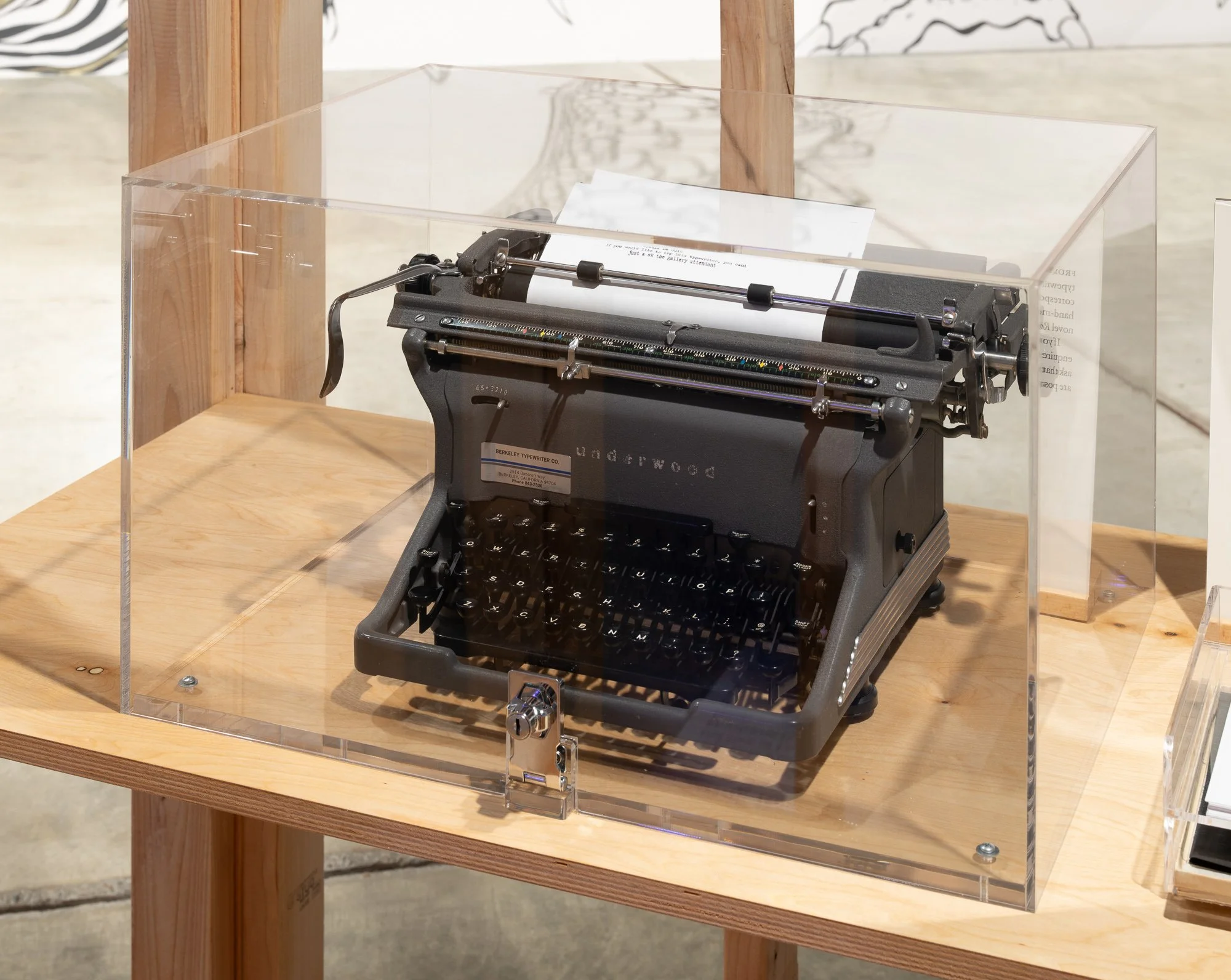
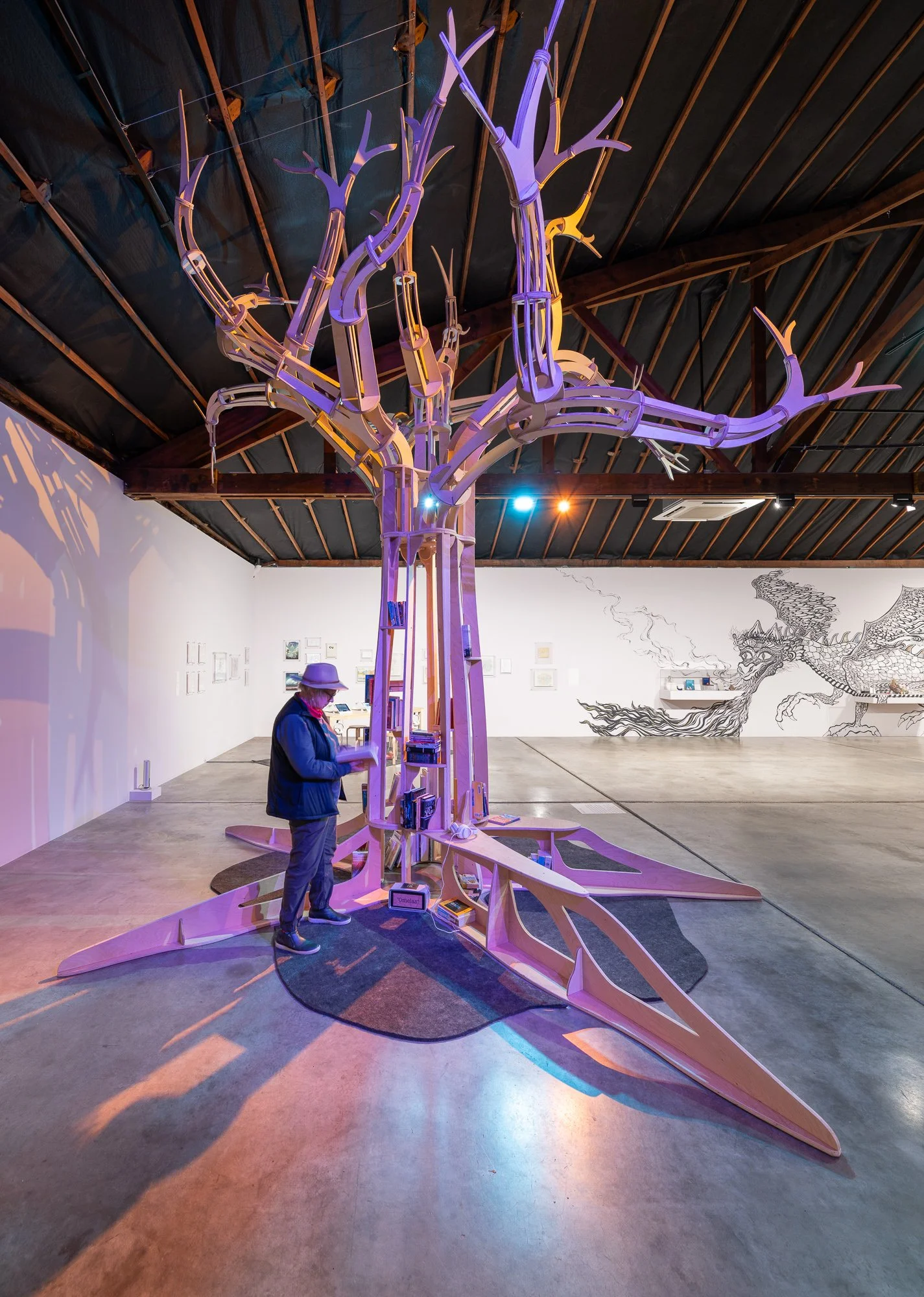
A biographical and poetical portrait of one of Oregon’s best known artists, who is also my mother, this exhibition examined important moments and themes in Le Guin’s life and oeuvre. The exhibition combined contemplative and open-ended experiences with extensive use of texts, images, audio, video, interactive experiences, and ephemera, creating both macro and micro engagement for visitors.
The exhibition offered different levels of engagement for fans and Le Guin novices alike, and includes murals by Ursula Barton, installations by Day Gay, Josh Michaels and Jeremy Rotsztain, visual art by Julia Goodman, Brittany Nelson, Tuesday Smillie, and video by Arwen Curry.
During titse three month exhibition run, A Larger Reality was punctuated by extensive programming that brought in other elements of Le Guin’s art including music, activism, and community engagement. An accompanying book, published by Winter Texts (Port Townsend) offers a series of texts by Le Guin and others.
A Larger Reality: Ursula K. Le Guin was supported by Oregon Cultural Trust, Autzen Foundation, The Kinsman Foundation, and The Ursula K. Le Guin Foundation. Sarah Miller Meigs as well as other anonymous individuals supported this exhibition.
Installation images courtesy of Oregon Contemporary. Image credit: Mario Gallucci Studios.
Installation images courtesy of JSMA at Portland State University. Image credit: Mario Gallucci Studios. Left image artists: Joshua Sin (left) and Jeremy Rotsztain (right). Right image artist: Joshua Sin.

Just Playin’ Around
January 21-April 26, 2025
JSMA at Portland State University
Co-curated with Nancy Downes-Le Guin
Artists: Derrick Adams, Calvin Chen, Jeremy Okai Davis, Latoya Lovely, Jillian Mayer, Takashi Murakami, Jeremy Rotsztain, Heidi Schwegler, Joshua Sin, M. Earl Williams, and Erwin Wurm.
Play is creative, imaginative, active, fun. When we think of play, we often think of children, who learn through play how to navigate the broader world. The United Nations designates play as a universal right of children. Mental health specialists increasingly highlight play for adults as a way to add joy to life and to connect with others.
Making art has long been likened to play. Artists play with materials and ideas; they mine childhood memories, use toys and referencing games and sport in their work. Artists use play to reframe the past, recontextualize the present or reimagine the future.
Play in art can be colorful and fun, but also can highlight serious subject matter. Playfulness, surprise and humor can comment on complex emotional and societal issues. Though adult humor and irony are much in evidence in contemporary art, the art we see in institutional settings, and the settings themselves, aren’t often playful. Just Playin’ Around seeks to give visitors a peek at how art is play, play is art, and play is in art, and in all of us.
Weaving Data
January 24–April 29, 2022
JSMA at Portland State University
Co-curated with Nancy Downes-Le Guin
Artists: Faig Ahmed, April Bey, Jovencio de la Paz, Ahree Lee, Kayla Mattes, Shelley Socolofsky, Joan Truckenbrod, Vo Vo, and Sarah Wertzberger.
Digital computing is deeply connected to weaving. Jacquard weaving, first demonstrated in 1801, gave instructions to a loom using holes punched in cards—an early form of binary code. Charles Babbage’s Analytical Engine (1834), the blueprint for modern computing, borrowed its design from the Jacquard loom, including the punch card, which remained in use for programming into the 1980s.
Historically, narratives of industrialization have minimized the contributions of women, low-wage laborers, and people of color. This same habit of erasure now plays out in high tech’s origin myths and frequent failure to cultivate inclusivity in education, hiring, and product design.
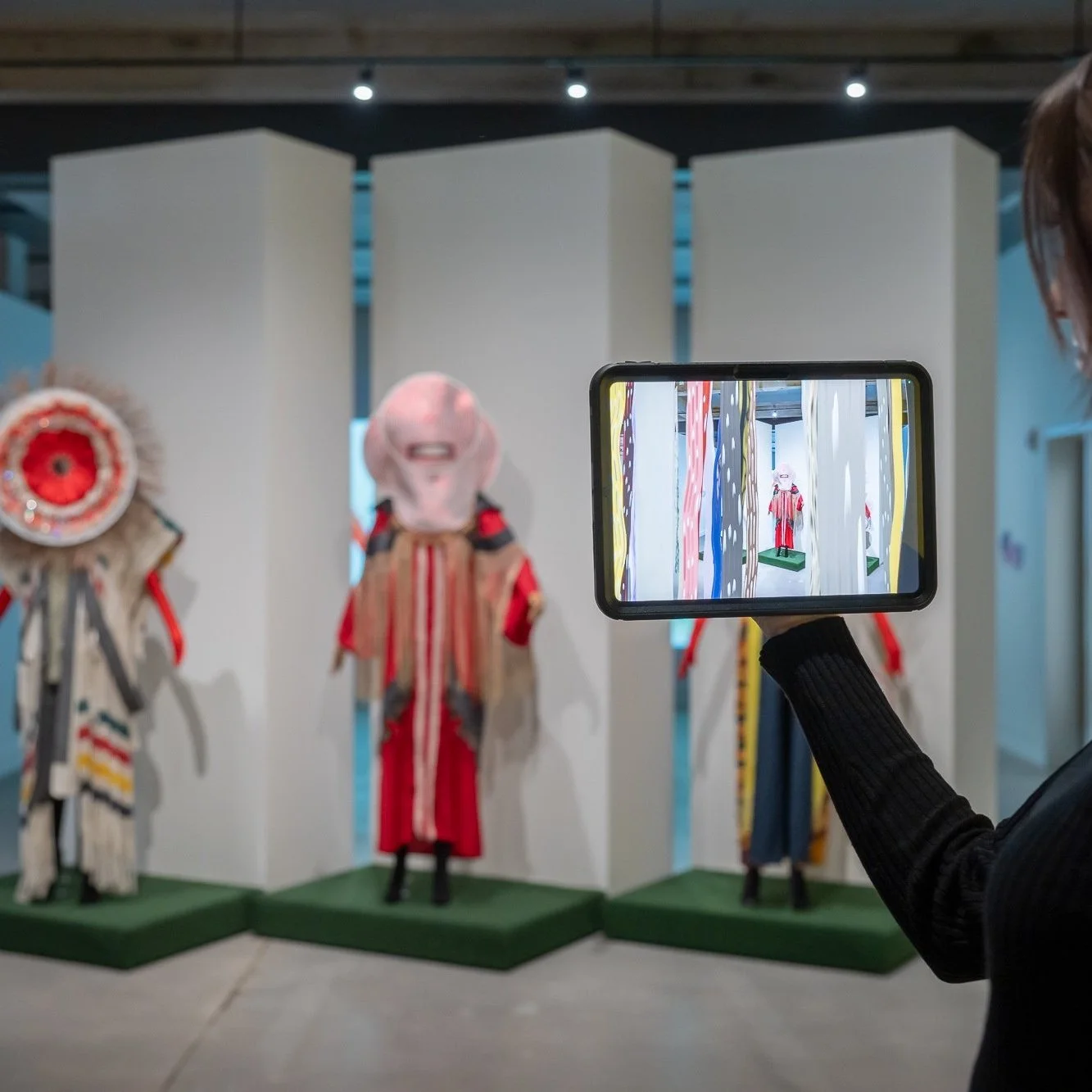
The artists in this exhibition investigate the complex relationship between weaving and computing. Some use data analysis, while others use metaphor. Some collaborate with computers to make their weavings; others weave by hand, but use data or internet memes as a basis for woven patterns. Regardless of approach, these artists remind us that we all have a say in deciding which technologies and cultural values we choose to elevate.


Installation images courtesy of JSMA at Portland State University. Image credit: Mario Gallucci Studios. Left image artists: April Bey (left) and Faig Ahmed (right). Right image artist: Jovencio del la Paz.